Showing posts with label drawing. Show all posts

Sunday, January 12, 2020

Harry Potter Party

Butterbeer, with colors of Ravenclaw, Slytherin, and Hufflepuff

A while back, my daughter had a Harry Potter themed party. I'm a pretty big Harry Potter fan, and so is she. She's gone as both Hermione and Luna for different Halloweens. This summer we went to London on a trip and did at least 4 different Harry Potter activities (with which my husband was very patient).

The entrance to Platform 9 & 3/4

My daughter and I worked together on the decorations, party favors, and stuff for the party, but really she did the vast majority of the actual work. She made signs for the various parts of the house to identify them as Harry Potter themed. The porch was Platform 9 & 3/4. She has a little shopping cart that she redesigned as the trolley going through the wall.
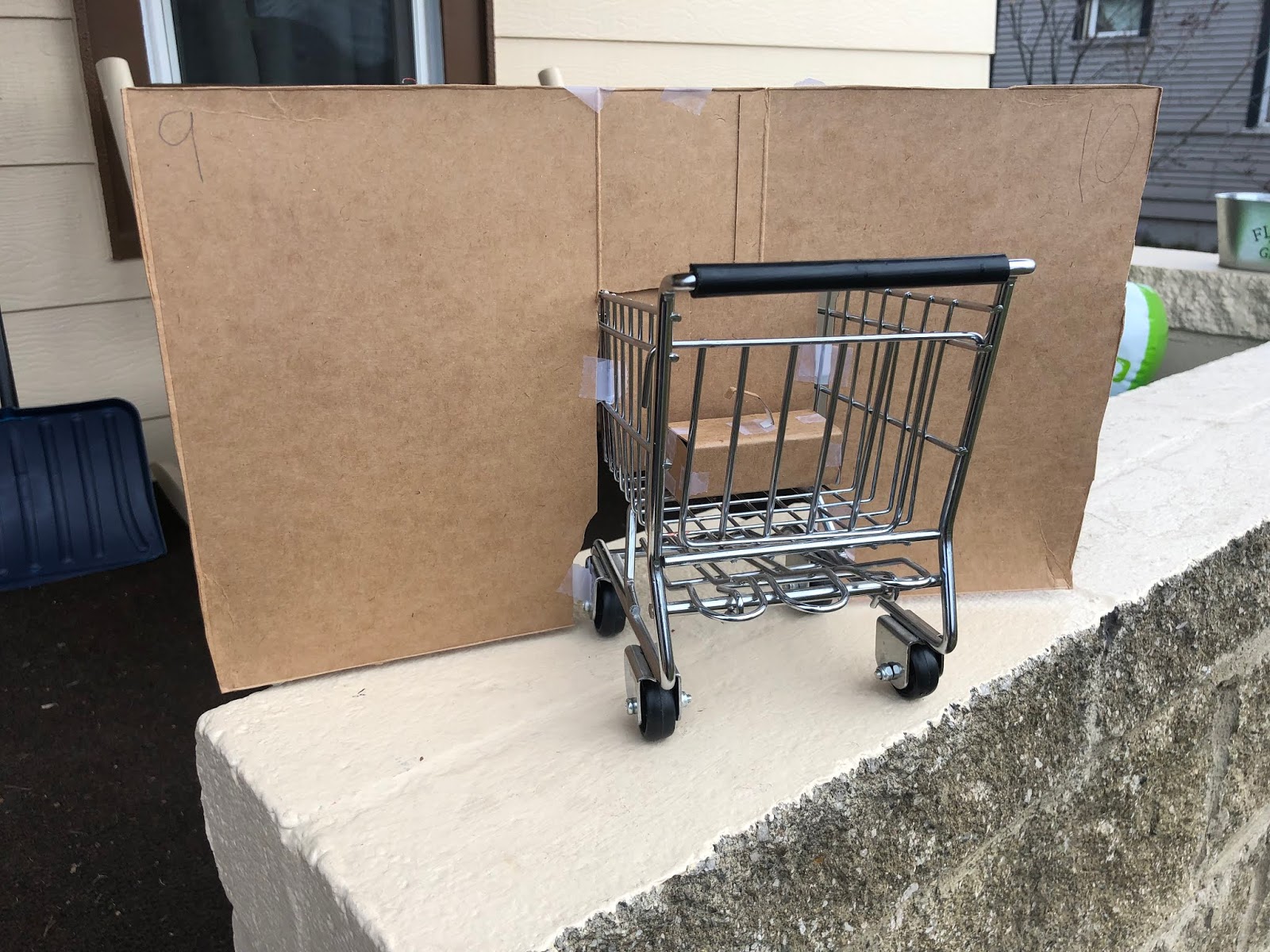
She was going to draw bricks on the wall but ran out of time.
There were lots of things for the guests, including chocolate frogs at Honeydukes' Sweet Shop and Butterbeer. The idea was that the kids would all decorate the chocolate frog boxes, but kids have better things to do at a party, apparently, so they mostly didn't get decorated.

Honeydukes and the undecorated chocolate frog boxes

We made the boxes and the chocolate frogs. We bought a chocolate frog mold, and melted chocolate chips into it. We dyed marshmallow fluff in yellow (for Hufflepuff), blue (for Ravenclaw), green (for Slytherin), and red (for Gryffindor). The chocolate frogs were pretty tasty, though also a bit messy. 

A half-eaten chocolate frog and butterbeer (discovered after the party)

The Butterbeer could be picked up at The Three Broomsticks (kitchen). We experimented with several recipes online, but we discovered that vanilla cream soda was the best tasting and least complicated. At first we added butter extract, but it didn't make a demonstrable difference in the flavor.

The 3 Broomsticks, Est. 1452 Hogsmeade

We bought tiny glass mugs from the dollar store and I drew the labels. My daughter colored them and we Mod Podged them on the mugs. We put food coloring in the bottom of the cups and let it dry. The internet suggested that we could add ice and no-one would notice the food coloring, but the internet was wrong. I compromised by spraying a bit of whipped cream in the bottom, then pouring the cream soda on top. The effect was great for color and foam, but the cups were tiny and they tended to overflow as the soda fizzed and combined with the whipped cream.
Cream soda, food coloring, and whipped cream


The color worked well and the kids could get sorted into two houses (via Butterbeer and via the chocolate frog). Later they played "quidditch" in the lawn, which basically consisted of Daddy hiding the "snitch" and the kids all running around and screaming til someone found it.

Butterbeer cups with dry food coloring in the base

The tiny Butterbeer cups were a good idea, given that we overdid all the other sugar by 1000. Besides Butterbeer and chocolate frogs, we had cookies and cupcakes

niffler cupcakes

Viera's Bakery in Yakima made us hedgehog cupcakes, which we converted to nifflers by hiding chocolate coins in the paper cupcake liners.

The Magical Menagerie (Pygmy Puffs and Nifflers now in stock)

The Xylophone was converted to the Magical Menagerie, but we couldn't quite decide if the Niffler's belonged there or in The Three Broomsticks or at Honeydukes'. 

Niffler drawing by Meghan Flynn

Somehow the child already had 3 (non-cupcake) nifflers and a hedging, and a number of her other stuffed animals appear to be pygmy puffs. My talented colleague Meghan Flynn (buy her art), gifted Alison a niffler drawing to add to the team.

Olivander's wand shop in a jar

We made each kid a wand (which was a ton of fun, really), but hot gluing pencils. I really enjoyed dropping the hot glue into shapes on paper, then peeling them up and using them to sculpt shapes on the end of the wands. 

Olivander's wand table

We painted some of the wands with glow-in-the-dark acrylic and the kids seemed to like them.

Our Harry Potter library

Besides the signs around the house, we collected all our Harry Potter books in one place. Besides the series and the plays, we have one illustrated copy (book 3), a cookbook, and several books I bought in the hiatus between Half-Blood Prince and Deathly Hallows. 


The Rookery (the Lovegood's House) Keep of the dirigible plums!

My daughter is a big fan of Luna Lovegood (and nifflers, obviously), so she wanted to make quibblers and spectrespecs, too. We tried to get cookies in the shape of spectrespecs, but weren't able to do so.


The girl spend a lot of time making quibblers (with the help of a photocopier). Each quibbler had a pocket with foam. The goal was that kids would trace and cut out spectrespecs and glue them onto plastic glasses, but we underestimated the time and overestimated the general attention span of the group as a whole, so none actually were finished.

The Quibbler, Birthday Issue by X Lovegood 

Alison designed a dot-to-dot and runes to decode inside. 

The runes on the right say Happy Birthday if you flip the magazine upside down

I'm guessing very few people got all the Harry Potter references in the party, since most of the kids had not read the whole series--and some had, shockingly, not read any. 

Grimmauld /Grim Old Place "Shh Don't wake anything up" (like the cats sleeping inside)

I asked Alison to keep people out of a couple of rooms in the house, so she labeled them as Nocturn Alley and Grimmauld Place. Which entertained me and worked in combination with the closed doors to keep the kids out. 

At the start of the flight we decorated the bottoms, but eventually we embraced a simpler aesthetic.

Since the chocolate frogs were tons of fun and we never got to decorate any, we made more for the family for Christmas. We made the chocolates and put them in a plastic bag, but apparently the pressure of the plane broke the chocolate and caused the colored marshmallow to squeeze out during the flight, so they didn't work particularly well.

Chocolate frog box from London

We decorated them together during our flight (about 6.5 hours) Initially we were referencing the official chocolate frog box, but as the flight continued, we just made our own designs, including an "Invisible Chocolate Frog" for the baby (since we were short one frog, and babies done eat chocolate).

Decorated and put together chocolate frog boxes from Christmas

The invisible frog box would have been a lot funnier ("fat free, 0 calories, gluten free") if all the other boxes had really had chocolate frogs inside, but the result was still kinda fun.
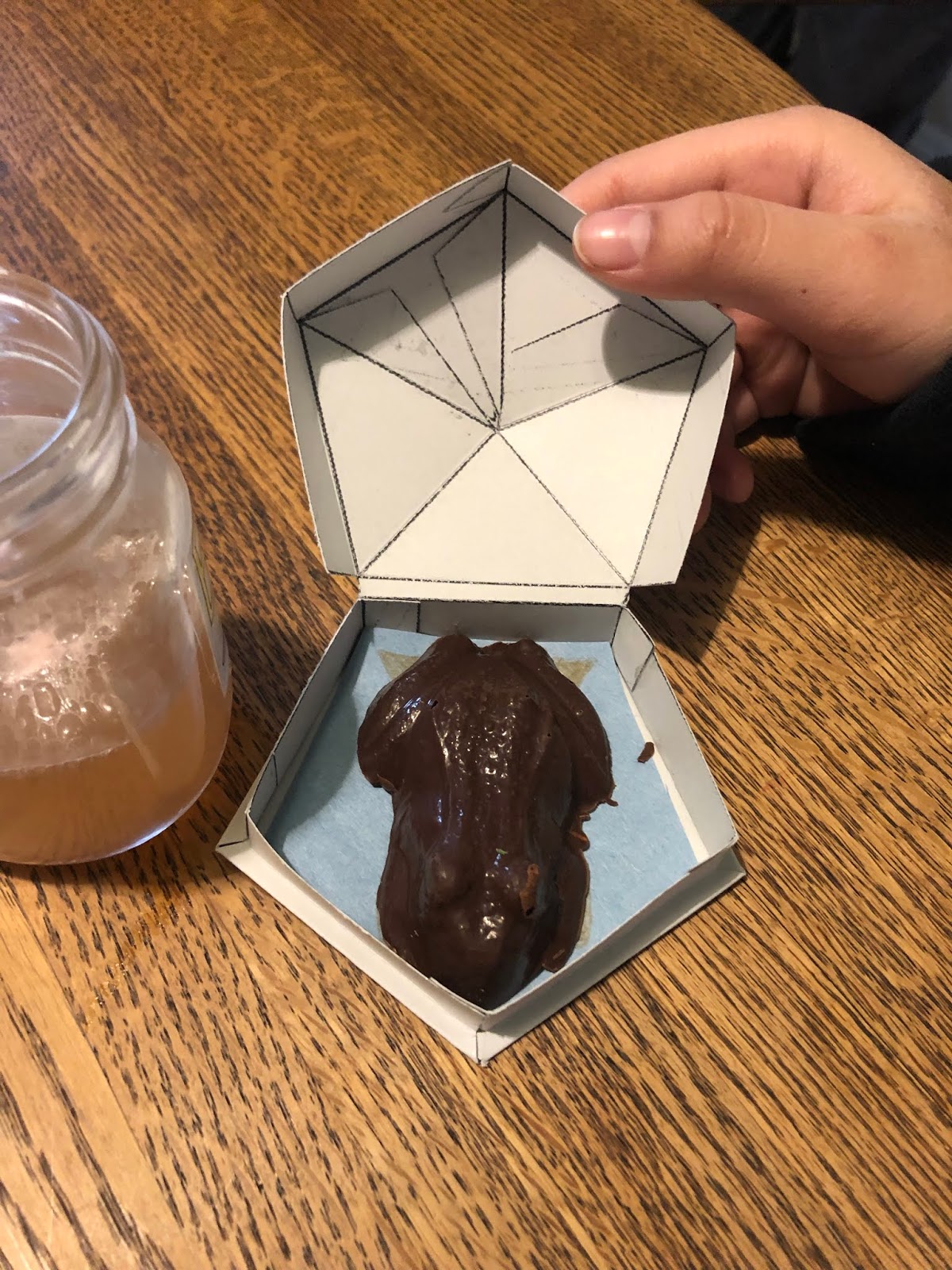
The birthday chocolate frog boxes had chocolate frog cards with a place for kids to draw their own wizard (or for marshmallow goo to stick)

Thursday, August 9, 2018

Gamifying My Online Class

Last month I finished making some sculptural work for a show in Hood River. That may be the end of my studio work time this year, because I've taken on a significant new project. I am planning to turn my online Art History class into a kind of game, and that daunting process looks likely to take up the bulk of my time until classes begin in September.

planning a mind map for the Art History class/game

I've heard a little about "gamification" over the years, but haven't encountered any faculty who've actually done much with it. The idea is to make an online class more like a video game and less like a lecture class. A gamified class would be interactive, fun, and engaging. Of course, I hope my classes are already interactive, fun, and engaging, but the idea is to make some changes that reduce the fear and test anxiety and increase the students' motivation to do the work. 

Ideally my gamified Art History class will have a kind of story, in this case the story of journey, which students can follow and tasks, challenges, and activities throughout that provide opportunities to earn points, badges, rewards, and praise. The overarching idea is to keep their attention, not just on the class content itself, but on doing the work. To determine if they have learned the content, I need them to show me what they know. Showing me what they know, through quizzes, tests, and writing assignments isn't always inherently fun, but if they are rewarded immediately for their efforts, and if the quizzes, assignments, etc can be broken up into smaller pieces, the hope is that they will be easier and/or more rewarding to complete.

the "physical properties" tool bucket includes a form hammer, medium pencils, and a size ruler, the idea is to remind students to think about size, form, and materials when discussing physical properties

I am modeling my framework partially on things like Khan Academy and DuoLingo, both of which give credit (in the form of beeps and bings and electronic badges or points) for brief activities, quizzes, answers, and even just for watching videos. Because of the rewards, both Khan Academy and DuoLingo are fun to use, apart from what one learns. 

the first part of Art Student's journey, collecting tools, equipment and training in the first week/introduction section

I have some idea of what needs to happen and what makes games addictive and fun, but I don't have really any experience in making something like this myself. I don't know how to make the quizzes have beeps and bings (and it looks like Canvas isn't ready to enable this for me, but I'm not sure why not). I also don't know how or an unable to incorporate moving parts like a video game (I'm really thinking that Canvas' next update should include some kind of a health bar on the top and students can refill it by watching the required videos and participating in the discussion forum). 

Since my skill and the current course management system won't do all that I can imagine, it is my intention is to be somewhat reasonable with my time and simply take some steps towards gamification. The first step has been thinking through how this will work. What is the story of this game and how can the various tasks that need to be completed for the students to learn and demonstrate their knowledge, be integrated into that story? 

my first sketch of the student avatar and tools

Strangely enough, I am finding this process to be quite edifying. Generally, I am having fun envisioning what this could look like and how it might work. Next week, I am planning to attend a Webinar about how to use badges and I find that to be very exciting (because I am apparently a huge course design nerd?). This week I tried to figure out badges on my own and gave myself a pounding headache without making a great deal of progress. The next day I learned about the webinar.

"subject specs" are gear that Art Student can collect to help with quests on the journey

I hope that the webinar will be useful and will allow me to use badges as rewards without making a lot of work for me creating and activating them. On the day I developed a headache I was trying to figure out how I could make them visible, make them look like actual badges, and award them to students after certain tasks. I was hoping to use art related gifs or small images that illustrate concepts, but I was running into size issue with the gifs and permission issues with the images. 

I came up with two possible solutions, on is drawing the badges myself and scanning them, and other other is using artworks from our textbook as the badges. Both of these will probably work ok, but I'm hoping for more from the webinar. The good news is that the drawing part of the process is fun and restful in a way similar to working in my home studio, whereas looking for stuff online and trying to manipulate it is frustrating and headache inducing.


A sculpture related SpongeBob gif could be a fun reward badge, right?


There's one more tool that I've been starting to try to learn. SoftChalk is a new software/tool YVC is adopting. It has been pitched as a way to create more interactive activities than we can do within Canvas itself. Of course there is a learning curve and no one on campus who knows the tool yet. It has been suggested that the person on campus who will explain the tool to others is me. Uh oh. 

I tried watching the intro video and discovered it explained how to edit text, adjust heading size, and use folders. My mind melted from boredom after watching this 8 minute video (at 1.5 speed), I decided to just try to use the tool myself. Making the pages and importing content was basically fine (though importing from YouTube isn't as intuitive as it could be), but when I tried to create an interactive assessment, I apparently missed a very important step. The result looks like my nephew's etch-a-sketch drawing.

This first attempt does not look like an enjoyable assessment activity.
Now that my headache has abated, I do intend to go back and try again, but with so many parts of the project, I haven't done so yet. The next day, after taking care of some unrelated work at school, I sat down to sketch some plans on paper. I found the drawing to be relaxing and enjoyable, similar to working in the clay studio and unlike working on the computer. 

Sketching and drawing has been very helpful for visualizing how this class will work in this game or game-like iteration. At the start of the summer I bought a very large sketchbook and started brainstorming and categorizing ideas and plans for the first few weeks.  

The "visual structure" section of the mind map and a suitcase of tools student will collect in the class/game. 


The process is seriously challenging in both conception and execution. I enjoy the drawing part, but it has been more difficulty to come up with a relatively cohesive "story" for the game and useful symbols or images to help the students understand how these class concepts can be used to understand art and to navigate the gamified class. At this point I am envisioning a journey, but I am not completely confident in how I will translate taking a quiz into the world of the journey.  

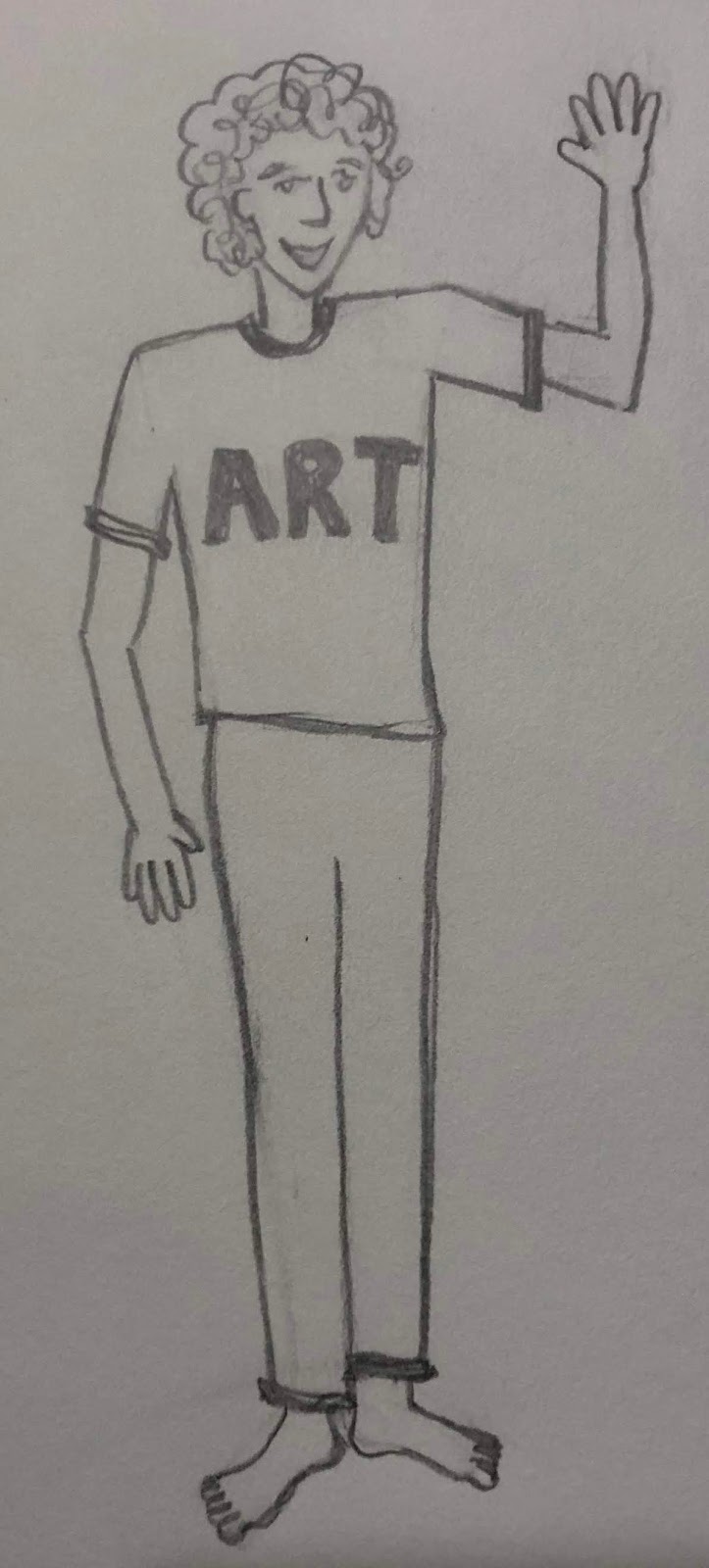
So far, I have developed an avatar for the class, an ambiguously gendered (hopefully) person named "Art Student" (I figure Art can be short for Arthur or Artemesia) who can go on a journey. In the first week of the class, students will collect some supplies or tools and equipment for themselves and the avatar to aid them on their journey. 

Art Student

At the start of the class, students will see a barefoot Art Student inviting them on a journey. The first step will be to learn about the structure of the class and, in so doing, earn Art and themselves a pair of hiking boots and a back pack. 

I usually record a video or two about the structure of the class, and I figure I can use a backpack as a prop when I pull out the textbook and a planner to talk about timing for the class and successful study skills. As I describe this here, I feel I'm balanced precipitously between this being a fun way to start class and an absolutely cheesy way to do it. Either the students will go along with me and my cheese drawings and limited technology integration or they will groan and flee the class in droves.


boots and backpack, the first equipment students will collect for their class

The rest of the first week will be spent on learning some terminology and attempting to set up a structure for how we approach the class. I like to work with a framework of four different categories when looking at art: subject, visual structure, physical properties, and cultural context. I've illustrated each of these as different types of tools or containers that Art Student can wear or carry. I am hopeful that this visual will help students learn the concepts, but also keep them connected to the story of the game.

Art Student ready to begin the art history journey

I found that SoftChalk doesn't appear to let me draw directly in the tool, which I thought it would do. Instead, it seems that importing images is the way to go. The day I was working with SoftChalk, I just drew up a quick sketch of a mind map to use in the activity, but quickly realized that SoftChalk "grading" won't allow the different parts of the mind map to be put in a different order. 

The mind map is simply a visualization of the categories I use in this class, and as such it doesn't matter if "subject" is in the top right or bottom left of the map. However, SoftChalk thinks it does matter. I realized that I will need to include some other kind of clue if I want the students to put the mind map together "correctly" in the SoftChalk tool. 

the "subject" section of the mind map

So today I drew a new mind map, but in place of the word "subject" I drew the tools or equipment I intend to have the Art Student collect when learning about subject. In this case I have developed "subject specs" as well as a symbolism sunglasses, a magnifying glass that identifies iconography and a set of binoculars that discern conventions. As I write this I realize that I might be basing this class game more on Dora the Explorer than some mature video game that teenagers and young adults will appreciate. 

In this vein, I've also created a map (Dora again) and watch to suggest cultural context, a suitcase for visual structure, and a bucket of tools for physical properties (including materials, form, and size). In the mind map activity, if I can get it to work right, these visual clue should help students correctly identify the sections of the mind map, which they will later be able to use themselves to create mind maps for particular artwork. 

"I'm a map!"

I've also sketched a graphic syllabus in the form of a map of the conceptual journey that the real students will take with Art Student through the class. The idea is that they are moving through the course content as through a physical space (even though, uh, the different sections of the class happen in some of the same spaces at different times in history/prehistory). 

a lightly sketched version of the graphic syllabus or map of the course


The other element of the gamified class that I want to integrate is the idea of quizzes, activities, and assignments as "quests" the student/avatar/player goes on to earn points/energy/knowledge for the class/game/journey.  I am thinking of it all of these different tasks as ways of gaining energy points for the journey, and I can almost see how it will work, but I also want to distinguish between the types of practice, studying, cooperation, etc that students do when learning the content. Combining the two ideas, of the game and simply being students, is much more complicated and I don't want it to confusing things.

I have barely started on the actual integration of these new images, revisions, and changes to the class in the online course management system itself. It is a big project and less straight-forward than other revisions I have taken on in my classes in the past. I hope it will work. If you have any suggestions or if you've gamified a class or know someone who has, I'd love to hear from you.